The Legend of the Witch's Eye: Scottish Folklore, Second Sight and Ancient Beliefs
Updated: Aug 22
We've all seen those eyes that make you stop and stare.
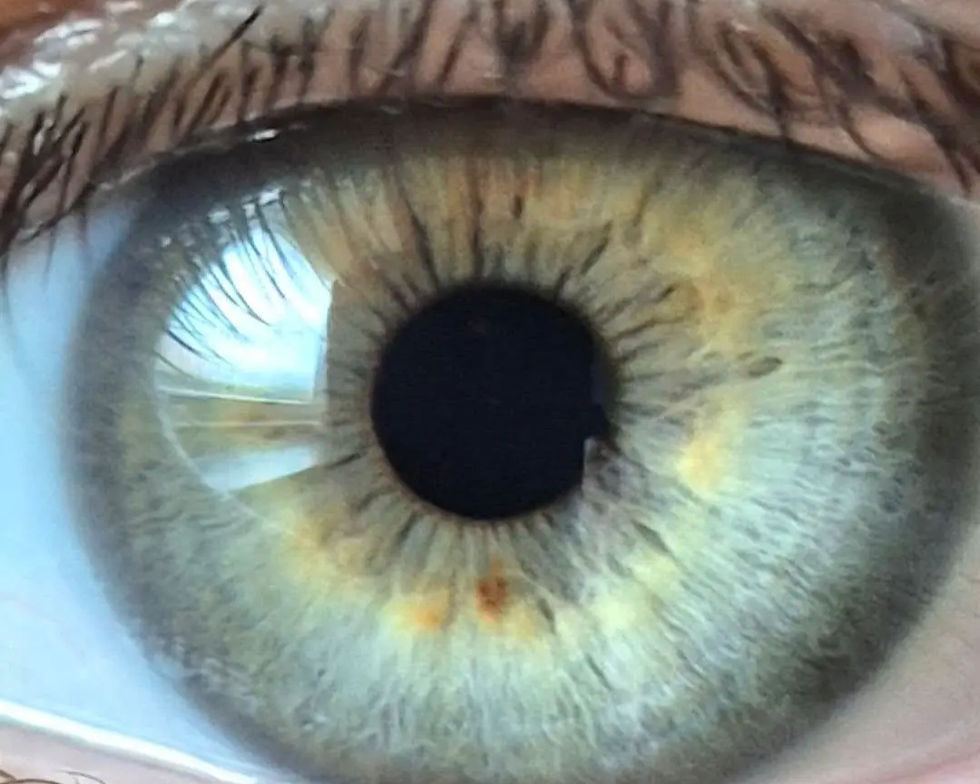
The kind of eyes that seem unusually striking. Blue eyes with a ring of gold around the pupil. Grey eyes that appear almost silver in certain light. Green eyes with hidden shades of amber that seem to change depending on the angle.
Some eyes simply stand out.
It's easy to understand why, long before genetics could explain eye colour, people attached stories and legends to them.
One of the most intriguing modern legends is that of the "Witch's Eye."
What Is a Witch's Eye?
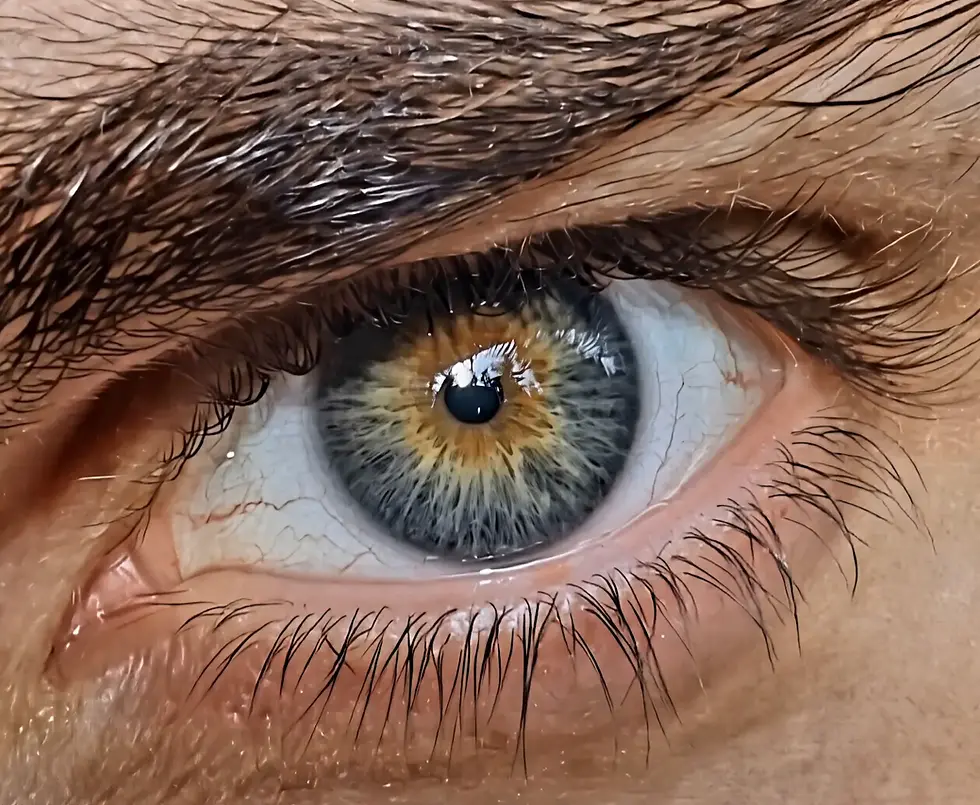
Today, the term "Witch's Eye" is often used to describe a striking eye pattern known as central heterochromia.
This occurs when a ring of a different colour surrounds the pupil, creating the appearance of multiple colours within the iris.
The effect can be stunning.
Blue eyes may contain rings of gold. Green eyes may appear almost emerald at the edge but amber near the centre. Grey eyes can seem to contain silver, blue and gold all at once.
While there is no recognised scientific condition called a Witch's Eye, the appearance is unusual enough that many people feel there must be something special about it.

The Scottish Connection
Scotland has long been associated with light-coloured eyes.
Blue, grey and green eyes have been common throughout Scotland for centuries, particularly in the Highlands and Islands. While these colours may feel ordinary here, they are far less common globally.
Many visitors to Scotland are often surprised by just how frequently they encounter blue, grey and green eyes compared to other parts of the world.
Although there is no evidence that the Witch's Eye is unique to Scotland or Celtic ancestry, it is easy to see why the legend became particularly popular in a country where striking eye colours are relatively common.
How Rare Is the Witch's Eye?
Globally, brown eyes are by far the most common eye colour, found in an estimated 70–80% of the world's population.
Blue eyes occur in roughly 8–10% of people worldwide. Hazel eyes account for around 5%, while green eyes appear in only about 2% of the global population. True grey eyes are rarer still and are estimated to occur in around 1% of people.
Then there is central heterochromia, the striking ring of gold, amber or a contrasting colour surrounding the pupil that many people now call a Witch's Eye.
While no reliable global statistics exist for the countless variations of central heterochromia, the trait itself is generally considered relatively uncommon.
The rarest combinations are likely those that pair an already uncommon eye colour with central heterochromia. For example, grey eyes occur in only around 1% of the world's population, and a vivid gold ring within a grey iris is rarer again.
Although precise figures do not exist, a striking "gold-on-grey" combination is likely to be exceptionally uncommon.
If you have grey, green or vivid blue eyes combined with central heterochromia, you possess a feature that relatively few people worldwide share.
Perhaps that helps explain why these eyes attract so much attention.

Second Sight and Highland Folklore
The idea of unusual eyes carrying special meaning may have roots in older Scottish traditions.
For centuries, many Highland communities believed in a gift known as Second Sight.
Known in Gaelic as An Dà Shealladh, it was said to allow certain individuals to glimpse future events or perceive things hidden from ordinary sight.
Accounts of Second Sight were recorded throughout the Highlands and Islands, and those believed to possess the gift were often regarded with a mixture of respect and caution.
It is not difficult to imagine how unusual eyes might become associated with such beliefs.
After all, if someone appeared different, people often looked for an explanation.
Why Do People Find These Eyes So Captivating?
Part of the answer may simply be rarity.
Most eyes are a single colour.
When multiple colours appear within the iris, especially in a dramatic pattern, our brains naturally notice it.
There is also something deeply human about the eyes. They are often the first feature we focus on when meeting someone.
A striking pair of eyes can make a lasting impression in a matter of seconds.
Perhaps that is why so many people who discover they have a so-called Witch's Eye become fascinated by it. It feels distinctive. Unique. Different from the ordinary.
And in many cases, it genuinely is.

The Truth Behind the Legend
The truth is that there is no evidence that people with a Witch's Eye possess supernatural abilities, ancient powers or a special genetic link to witches.
The pattern is simply a beautiful variation of human eye colour.
But that doesn't make it any less remarkable.
For centuries, people have attached stories to unusual features. Some legends grow because they explain the unknown. Others survive because they capture something we already feel.
The Witch's Eye may not be a historical Scottish legend in the traditional sense, but it taps into something much older: our fascination with mystery, beauty and the feeling that some people possess a look that is impossible to forget.
So Do You Have a Witch's Eye?
If your eyes contain a ring of a different colour around the pupil, you may have central heterochromia.
No, it doesn't mean you definitely descend from witches.
Or that you necessarily possess Second Sight.
But it does mean your eyes have a feature that many people find striking, unusual and memorable.
And perhaps that's the real reason the legend survives. Not because of magic, but because some eyes are simply impossible not to notice.
Organic Beard & Body Care Inspired by The Scottish Highlands
Explore our range of organic beard and body care products, handcrafted in Scotland using wild botanicals inspired by the forests, coastlines and landscapes of the Scottish Highlands.
Some of Our Favourite Witch's Eyes
Following our recent social media post about the legend of the Witch's Eye, we were amazed by the number of photos sent in from across Scotland and beyond.
From vivid blue eyes with rings of gold to striking grey eyes with amber centres, here are some of our favourite examples shared by our followers.